140 – a number to wonder about

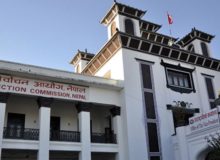
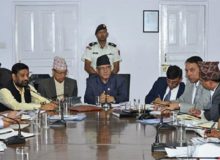
The aspect of Nepali party politics that caught our attention last month is a simple one at first glance: the number of parties that registered for the – maybe – upcoming election in November this fall. Aside from the number, however, there is little simple about it. 140 is the count of political parties right now, excluding those that decided not to participate. A huge number! It might not be surprising that the number has climbed that high – perhaps it’s only natural that more parties are formed as time goes by. But then again: how can there be so many parties – in Nepal?
Ask a scholar and many will say that political parties are meant to represent sets of values and goals in society: interests that many people have in common. That’s their classical role. The old social-democratic parties of Europe, for instance, represented the interests of the “working class”, conservative parties those of the better to do, still others different segments. Many envisage that parties and their leaders should represent broader ideologies and policy goals. So, if that’s the role of political parties, what interests do each of the 140 parties in Nepal’s election represent: those of the “working class”, perhaps, or of the “farmers” or the “middle class”?

The number of parties, however, has also sky-rocketed because of another factor. Let’s call it factional strife. In fact, one party after the other has faced bitter inner division among their leaders ending up in dramatic conflict and splits. Nepali Congress, UML, the Maoist Party – almost all of the big parties – have long-since tried to undergo this type of division, breaking up into new and smaller parties at least once. Leaders have clashed – each with their own network of supporters in tow – and parties have divided. Quite strikingly, many of the new “ethnic” parties have gone through the exact same process. As a result, many parties have been formed in the name of the same ethnic group: just look at the growth in the number of Madhesi parties or Tharu parties!
What are the factional clashes that cause Nepal’s parties to divide about. Ideology, perhaps? Rarely so. Most will tell you they are about power. Ambitious party leaders – some with a national platform, many with merely regional or ethnic support – clash in disputes over positions and influence. They often find no other way than to break away and form new parties. These leaders usually have hopeful supporters in their back – some ready to collect votes, others invested with their money – and all of them with their eyes on power: on the positions at the center and the benefits these can yield. Naturally, in this political climate, the number of parties has to climb!
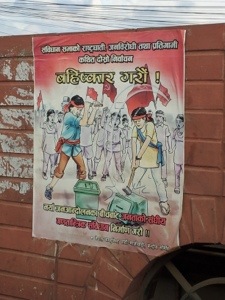
Finally, what’s the number of parties going to be in elections later on: 175, perhaps, or maybe 200? Well, the more aspiring leaders are disgruntled, and the more resources they have to enter the power struggle, the higher the number will likely be. But why look that far ahead indeed – let’s see if there will be an election in November at all! Several parties have boycotted the election already – including a Maoist break-away party – urging others to follow suit, and with so many parties in Nepal, who’s to tell what an election will bring. We find it hard to eye a more stable political situation. Or are we too pessimistic? Well, for most locals, all you can do is to wait and see.